Maui Real Estate Search
Address Search
Septic Tank Maintenance
While septic tanks aren’t exactly a hot topic, it’s very important to know what to look for when purchasing one, and it’s equally important to know how to maintain one. We’ve gathered the basic information for you to save you time and potentially money.
DO:
- Keep grass or other vegetation growing on the drain field to prevent erosion and promote evaporation.
- Keep a sketch of your system handy, so you know where to access all of its components.
- Watch for settling soil that might direct water onto the drain field.
- Keep on top of system maintenance.
- Fix leaky faucets and toilets.
- Keep records of repairs, maintenance and your pumping schedule.
- Make sure the tank cover is accessible.
- A septic system can last 25 years or more. Your property will have a second area earmarked for a subsequent septic system. Protect this reserve area from soil compaction.
DON'T:
- Plant trees or shrubs near the system. Roots can damage pipes.
- Drive or park on the drain field.
- Build on the drain field or cover it with a hard surface.
- Let faucets run unnecessarily.
- Install automatic sprinklers that water over the system.
- Excessively water the grass on the drain field.
- Put anything but waste and waste water into the tank.
- Use caustic drain cleaners.
General Maintenance
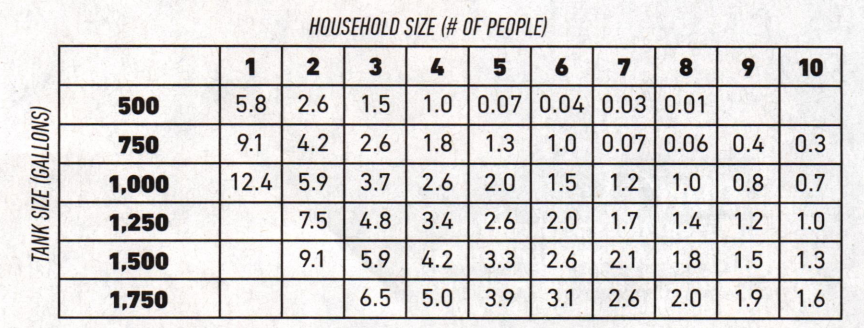
Your drain field and system need monitoring and inspection. Filters may need cleaning as often as every year, and the tank needs to be pumped out periodically. The chart above shows how often (in years) each tank size needs to be pumped depends on the number of occupants. Again, this is just an example, and regulations vary by state. A typical modern septic tank has three manhole covers: one to access the pump, one to access the fitter, and one to pump out the tank.
What Type of System do You Need?
A soil test can determine whether you need a holding or septic tank. Below are the options.
HOLDING TANK:
A holding tank stores waste until it needs to be pumped out. It has an alarm to let you know when it's time.
SEPTIC SYSTEM:
This consists of a septic tank with lines running to a drain field. This may have a filter that removes particles and directs them to the drain field, where the waste is treated and absorbed into the soil.
ADVANCED TREATMENT SYSTEM:
Common options for advanced treatment systems are aerobic treatment units and media filters. Mound systems are an option if your property has a high water table or rocky soil. This system treats and purifies wastewater in an above-ground mound before it enters the soil.
What Type of Tank Do You Need?
Your septic system needs an approved tank. Concrete is the most common, followed by polyethylene tanks. Twin-watt polyethylene tanks are strong but costly. Single-watt poly tanks are susceptible to collapse when pumped out, so they should only be used when plot-line restrictions are so tight that the new tank can only reach its destination by collapsing it.
What Size of Tank Do You Need?
The graph below is a general guideline.
If you want an expert opinion, Linda Taylor is a great resource on Maui!