Maximizing Outdoor Living: Designing the Perfect Maui Lanai Space
On Maui, the line between indoor comfort and outdoor beauty isn't just blurred, it is intentionally dissolved across our island real estate portfolio. A well-designed Maui lanai serves as the true heart of the home, expanding your usable footprint while capturing gentle trade winds, panoramic ocean views, and iconic tropical sunsets.
Whether you are renovating an oceanfront Kihei condo, exploring short-term rental properties, or personalizing a custom estate, thoughtful outdoor architecture directly enhances daily quality of life. For modern Maui home buyers, a bare concrete slab with basic furniture falls far short of expectations when competing in today's luxury market.
Designing an exceptional outdoor sanctuary requires balancing tropical aesthetic goals with island microclimates, high UV exposure, and ocean breezes. To explore current market listings with stunning outdoor setups, view our latest Maui Real Estate Market Report before starting your design process.
.jpg)
1. Establishing Seamless Indoor-Outdoor Flow
The hallmark of modern Hawaiian architectural design is an effortless transition between interior living areas and the covered lanai. Achieving this fluidity requires unified design choices that direct the eye toward surrounding gardens and marine views across premier Wailea real estate.
Pocketing glass door systems tuck away into walls, removing physical barriers between indoor great rooms and outdoor spaces across Kaanapali homes.
Extending interior flooring, such as large-format porcelain tile or natural teak, onto the covered lanai creates the visual illusion of one expansive living area.
Mirroring interior neutral tones and coastal accents on outdoor upholstery maintains design harmony, a strategy highlighted in our Wailea Lifestyle Guide.
For buyers evaluating master-planned communities across Upcountry Maui or South Maui, high-end pocketing doors and flush floor transitions remain among the most requested structural features. Review our Guide to Building a Home on Maui for deeper permitting and structural construction insights.
2. Selecting Climate-Resistant Materials & Furnishings
Maui's coastal environment requires careful material selection to withstand salt-laden air and intense sunlight. Inferior outdoor furniture deteriorates quickly, whereas premium materials ensure long-term durability for oceanfront Haiku properties and coastal estates.
- 1
Marine-Grade Metals & Teak: Choose powder-coated aluminum, stainless steel, or Grade-A teak. As covered in our Maui Climate Resiliency Guide, marine-grade materials naturally resist decay and moisture.
- 2
Solution-Dyed Acrylic Fabrics: Specify high-performance textiles like Sunbrella. Solution-dyed fabrics lock color deep into the fiber core, preventing UV fading and ensuring mold-resistant durability.
- 3
Rope & Synthetic Resin Wicker: All-weather HDPE wicker and UV-stabilized outdoor ropes add rich textural depth without unraveling or cracking under tropical heat.
Investing in climate-resilient furniture protects your capital and lowers maintenance overhead, a crucial consideration when reviewing an AOAO Maintenance Fee & Reserve Study for condominium properties.
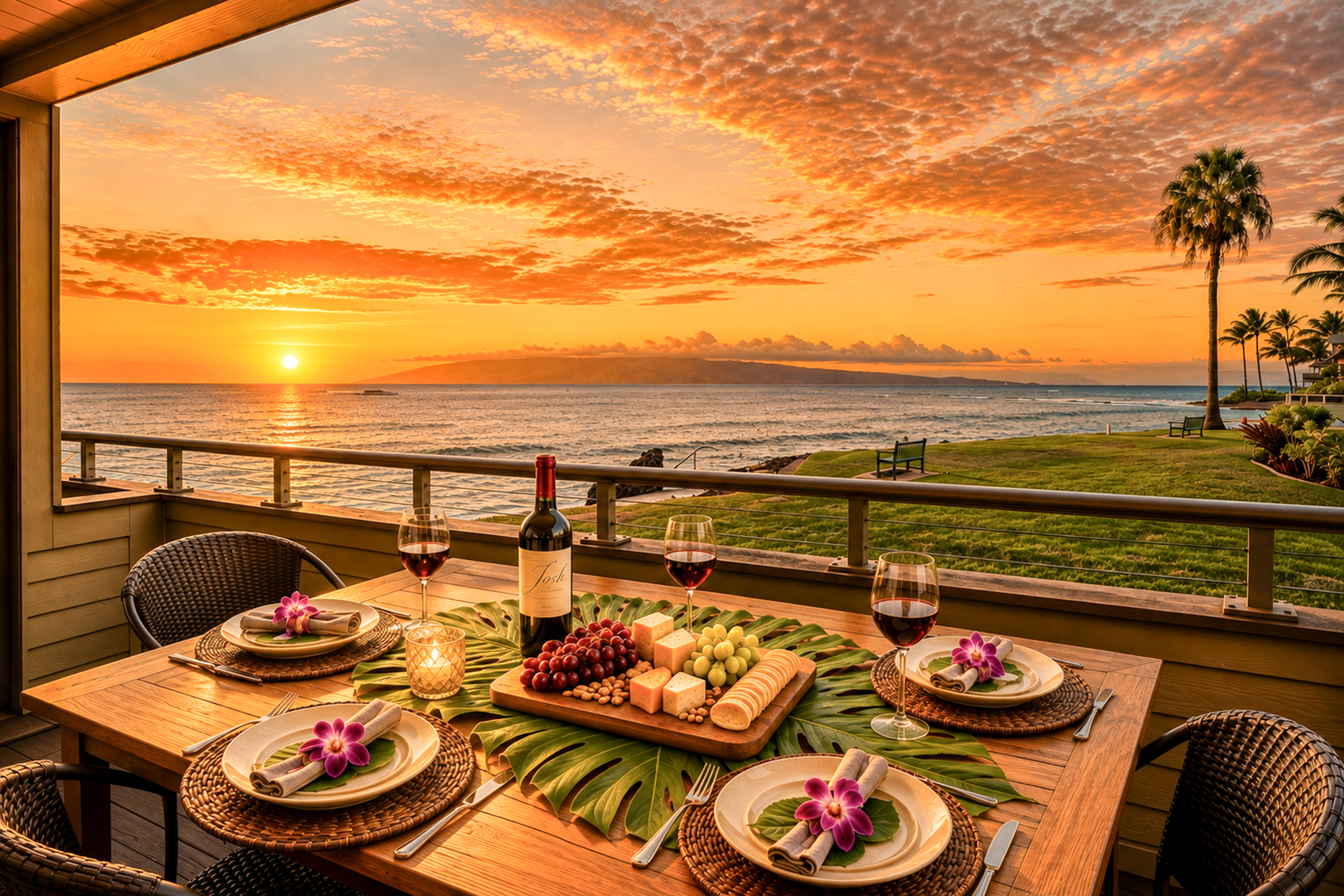
3. Creating Distinct Functional Zones
Rather than treating your lanai as a single open porch, divide the footprint into dedicated functional zones tailored to daily relaxation and entertaining. This multi-zone approach is popular among single-family homeowners in Kula and coastal resort communities alike.
- The Outdoor Lounge Area: Deep-seated sofas, teak armchairs, and low coffee tables centered around a gas fire pit create an inviting evening gathering space.
- Al Fresco Dining Hub: Position your dining table close to outdoor kitchen facilities or indoor pass-through windows, ensuring trade winds move smoothly under overhead fans.
- The Culinary Station: Built-in stainless steel barbecues, under-counter refrigeration, and prep sinks elevate everyday cooking into a luxury resort experience. For HOA rules regarding outdoor grills, check our Condo Due Diligence Checklist.
- Sun & Relaxation Corners: For open deck areas, position adjustable chaise lounges paired with cantilevered umbrellas to offer flexible shade control throughout the day.
4. Lighting, Landscaping & Privacy Solutions
A well-designed lanai space comes alive after dark. Layered outdoor lighting establishes an inviting ambiance while highlighting surrounding native landscaping across luxury Hale Ono Loa condos and private residential estates.
Incorporate dimmable LED overhead downlights, warm LED strip lighting under outdoor kitchen counters, and low-voltage uplighting on nearby palms, monstera, and plumeria. To understand how land-use and environmental codes protect open space and coastal views, read our overview of the Maui Title 19 Zoning Rewrite.
For close-neighbor privacy or wind mitigation, utilize motorized drop-down shade screens, tropical timber louvered panels, or strategically planted privacy hedges using native podocarpus, ti plants, or clumping bamboo.
Frequently Asked Questions (FAQ)
1. Do I need a county permit to cover or enclose my Maui lanai?
2. What is the best material for outdoor lanai flooring on Maui?
3. How do I protect my lanai furniture during severe wind or storms?
4. Does adding a luxury outdoor kitchen increase Maui property value?
5. How can I keep insects off my lanai without blocking ocean breezes?
Find Your Perfect Outdoor Sanctuary on Maui
Whether you are searching for an oceanfront condominium with a sweeping sunset lanai or looking to list a luxury estate engineered for indoor-outdoor living, our local experts deliver the market intelligence and tailored guidance you need.